



Introduction
Dairy farming is a central component of Tunisia’s agricultural economy, contributing approximately 11 % of total agricultural output and ensuring national self-sufficiency in milk (ONAGRI, 2023). In 2023, national milk production reached an estimated 1.4 billion liters, largely covering domestic demand. More than 112,000 dairy farmers depend on this sector, making it essential for rural livelihoods and national food security (ONAGRI, 2023).
Despite its socio-economic importance, the dairy sector is a significant source of greenhouse gas (GHG) emissions. These emissions arise mainly from enteric fermentation, manure management, feed production, and land-use change (Gerber et al., 2013). Globally, agriculture accounts for about 23 % of anthropogenic GHG emissions, with livestock contributing roughly 14.5 %. Dairy production alone represents around 4 % of global emissions (Gerber et al., 2013; Kebreab et al., 2023).
In Tunisia, Ammar et al. (2020) used the IPCC Tier 1 and Tier 2 methodologies (IPCC, 2006) to estimate emissions from livestock systems. Their results showed that livestock contributes nearly 26 % of agricultural GHG emissions, with dairy cattle responsible for more than 52 % of national CH4 emissions, mainly from enteric fermentation.
Dairy systems emit three main GHGs: methane (CH4), nitrous oxide (N₂O), and carbon dioxide (CO2). Methane is produced through ruminal fermentation and anaerobic manure storage and has a global warming potential (GWP) 28-34 times higher than CO2 (Gerber et al., 2013). Nitrous oxide, with a GWP of 265-298, originates primarily from manure and fertilized soils, whereas CO2 emissions stem from fossil fuel use, land-use change, and input production (IPCC, 2013; FAO, 2013).
Emission levels vary across production systems and feeding strategies: extensive systems typically produce more CH4 per unit of milk, while intensive systems often generate higher N2O and CO2 emissions per hectare (Gerber et al., 2013; Ammar et al., 2020).
Several methods and tools have been developed to quantify livestock-related GHG emissions. The IPCC guidelines (IPCC, 2006) offer a tiered framework (Tiers 1-3), allowing countries to select between default emission factors or more detailed, country-specific approaches. Advanced models such as GLEAM-i (FAO, 2017) are widely used for global and regional assessments, while CAP’2ER is increasingly applied in Europe for farm-level environmental evaluation and mitigation planning (Godinot et al., 2022).
In Tunisia, a recent application of GLEAM-i in the Governorate of Manouba estimated total livestock-related emissions at approximately 5 Mt CO2-eq in 2020. Methane was the dominant GHG (55 % of emissions), followed by N2O (27 %) and CO2 (18 %). Small ruminants contributed nearly 94 % of total emissions, while cattle and poultry contributed approximately 6 % and less than 1 %, respectively. These findings reflect the predominance of extensive, low-input livestock systems in the region (Hamzaoui et al., 2024). However, the use of tools such as GLEAM-i requires complete and detailed datasets, which can limit their applicability in data-scarce environments.
For such contexts, the Comprehensive Livestock Environmental Assessment for Improved Nutrition, a Secured Environment and Sustainable Development (CLEANED) tool was developed by ILRI and partners (Van der Hoek et al., 2021). CLEANED uses simplified and participatory data collection combined with scientifically robust emission factors. It applies a mass-balance approach to estimate feed demand, manure production, and nutrient flows, and integrates IPCC-based emission factors to quantify CH₄ from enteric fermentation and manure, N2O from manure and soils, and CO2 from energy use and land-use change (IPCC, 2019 ; Van der Hoek et al., 2021).
Beyond GHG emissions, CLEANED provides indicators on land use and water consumption, making it a versatile decision-support tool for low- and middle-income countries. Compared with GLEAM-i and CAP’2ER, CLEANED is less data-intensive and is particularly suited for participatory scenario analysis and the identification of feasible mitigation options from farm to landscape scale (Notenbaert et al., 2021).
In this study, we used the CLEANED tool to assess GHG emissions from diverse dairy farming systems in Tunisia. The analysis focused on variation across previously described farm typologies and on the breakdown of emissions by source and gas type, with the aim of supporting context-specific mitigation strategies adapted to national production realities.
The objective of this study was to use CLEANED to assess GHG emissions across the main dairy production systems in Tunisia. The analysis focused on variation across previously identified farm typologies and on the distribution of emissions by source and gas type. The findings aim to support the design of context-specific mitigation strategies tailored to national production conditions.
Materials and methods
Study area
This research was conducted in the main dairy production regions of Tunisia (Figure 1), namely: the North-West (Governorates of Béja, Bizerte, Jendouba, Siliana, and Kef), the North-East (Governorates of Ben Arous, Manouba, Ariana, Tunis, Nabeul, and Zaghouan), the Central-East (Governorates of Sousse, Monastir, and Mahdia), the Central-West (Governorates of Kairouan and Sidi Bouzid), and the South-East (Governorate of Sfax). The choice of the governorates was based on statistics from the Agricultural Department, where they indicate a significant presence of purebred cows dedicated to milk production.

Figure 1. Geographic distribution of the study area across the main dairy production regions in Tunisia
Farmers, survey and data collection
A structured survey was carried out between November 2023 and June 2024 in collaboration with the regional offices of the Livestock and Pasture Office. A total of 102 dairy farms were purposively selected to capture the diversity of production systems across the main agroecological zones. The selection also considered farmers’ willingness to participate, as well as the availability and reliability of farm records.
The questionnaire was designed to meet the specific input requirements of the CLEANED tool (Notenbaert et al., 2021). It collected detailed quantitative and qualitative information on:
Herd structure and performance, including herd size, animal categories, age, daily milk yield per cow, and basic milk quality indicators;
Feeding practices, with a focus on diet composition across seasons and the relative proportions of concentrate, dry forage, green forage and silage;
Manure management, covering the type of manure, storage conditions and handling practices;
Cropping systems, including total cultivated area, land use, irrigation status, and types of forages produced;
Input use, particularly fertilizers, feed supplements, and other external resources.
A descriptive overview of the key animal- and farm-level variables collected through the survey is presented in Table 1, which summarizes the mean, standard deviation, minimum, and maximum values for herd size, cow age, milk production indicators, lactation duration, and other structural parameters.
Table 1. Descriptive statistics of the animal dataset collected from surveyed dairy farms
Typology of dairy cattle production and feeding system
For the characterization of dairy farm typologies and production systems, multivariate statistical analyses were performed using XLSTAT software (Addinsoft, 2016). This approach enabled a comprehensive interpretation of the multidimensional data collected through farm surveys. A Principal Component Analysis (PCA) was first applied to summarize and reduce the dataset while preserving the main sources of variability among farms. The first seven principal components explained 71.43 % of the total variance. Subsequently, a hierarchical clustering based on the individual coordinates along the principal components was carried out, and the final classification was refined using the K-means clustering algorithm.
Three distinct clusters of dairy production systems were identified, each reflecting the structural and functional diversity of Tunisian dairy farming. The first group represented 51 % of the surveyed farms and corresponded to small landless or rainfed systems. These farms are generally characterized by limited agricultural surface (2.86 ha on average), herds composed mainly of crossbred cows (around 14.86 per farm), and feeding strategies primarily based on purchased feed inputs. Concentrates account for an average of 46 % of the ration and dry forage for 49 %, indicating a strong dependence on external feed markets. These farms are mostly located in the Central-East, Central-West and South-East regions.
The second cluster represented 26 % of the farms and corresponded to mixed production systems combining rainfed and irrigated land. These farms cover an average of 9.7 ha and include herds of approximately 18.15 cows. Their feeding strategies are more balanced, with averages of 35 % concentrates, 30 % dry forage, 30 % green forage and 5 % silage on a dry matter basis. Most farms belonging to this cluster are located in the North-East and illustrate a transition toward improved forage autonomy and more controlled feeding resources.
The third cluster comprised 23 % of the surveyed farms and represented large irrigated or semi-intensive systems. These farms have the largest agricultural surface (71 ha on average) and the largest herds, with approximately 98 cows. Their feeding strategies are more diversified and include averages of 29 % concentrates, 26 % dry forage, 31 % green forage and 14 % silage, reflecting increased resource availability, mechanization and feeding capacity.
This typology served as the analytical framework for comparing greenhouse gas emissions and assessing their variability across dairy production systems in Tunisia.
The CLEANED tool
To assess GHG emissions in farms from the main dairy production regions in Tunisia, the CLEANED tool was applied. It was developed by the Alliance of Bioversity International and the International Center for Tropical Agriculture (CIAT). It is a participatory and modular model tailored for data-limited contexts and allows for ex-ante evaluation of the environmental trade-offs of livestock interventions (Notenbaert et al., 2021).
In the current study, the model was run individually for each farm using the survey data. The GHG-related indicators calculated by CLEANED are presented in Table 2. These outputs were used to compare the environmental performance of the different farm typologies in terms of emissions intensity.
Table 2. GHG emission indicators Calculated by the CLEANED tool
Data processing and statistical analysis
Descriptive statistics (means, standard deviations, ranges, and frequencies) were computed using the procedures PROC MEANS and PROC FREQ in SAS software (SAS Institute Inc., 2009). Prior to performing inferential analyses, the assumptions underlying parametric tests were systematically verified.
Normality of the residuals was assessed using the Shapiro-Wilk test (PROC UNIVARIATE), and homogeneity of variances among clusters was evaluated with Levene’s test (PROC GLM). Independence of residuals was verified by examining residual-versus-fitted plots and conducting the Durbin-Watson test when applicable.
After validating these assumptions, differences in GHG emission indicators among the three farm clusters were tested using a one-way analysis of variance (ANOVA) through PROC ANOVA. When significant effects were detected (p<0.05), Tukey’s Honestly Significant Difference (HSD) test was applied for post hoc multiple comparisons. All statistical tests were two-sided.
Results and discussion
Total GHG emissions
The results presented in Table 3 show significant differences in greenhouse gas (GHG) emission indicators among the three dairy production clusters.
Emissions expressed per kilogram of milk differed significantly (p=0.002), with Cluster II displaying the lowest emission intensity (0.83 kg CO2-eq/kg milk), while Clusters I and III showed comparatively higher values (0.88 and 0.91 kg CO2-eq/kg milk, respectively). These findings suggest that intermediate production systems may achieve better emission efficiency at the product level. The relatively small variation among clusters indicates comparable feed digestibility and milk conversion efficiency across production systems, as also reported by Yan et al. (2010) and Knapp et al. (2014).
Emissions expressed per kilogram of live weight gain (LWG) also varied significantly among clusters (p<0.001). Higher emission intensities were observed in Cluster III (66.2 kg CO2-eq/kg LWG), followed by Cluster II (60.3 kg CO2-eq/kg LWG) and Cluster I (55.8 kg CO2-eq/kg LWG). This pattern reflects differences in herd structure, growth rates, and rearing duration. Similar trends were documented by Capper et al. (2009) and Gerber et al. (2011), who reported that intensification may increase emissions per unit of body weight when management efficiency is not fully optimized.
Significant differences were also observed for emissions per kilogram of milk protein (p=0.005). Cluster II showed the lowest protein-based emission intensity (24.1 kg CO2-eq/kg protein), while Cluster III exhibited the highest value (26.7 kg CO2-eq/kg protein). These variations highlight differences in protein yield and feed conversion efficiency among production systems. Kristensen et al. (2011) similarly emphasized the importance of nutritional strategies and genetic potential in improving protein-based emission efficiency.
When emissions were expressed per hectare of utilized land, differences became more pronounced (p<0.001). Cluster III recorded the highest land-based emissions (3.82 t CO2-eq/ha/year), followed by Cluster II (3.41 t CO2-eq/ha/year) and Cluster I (3.18 t CO2-eq/ha/year). Higher emissions per hectare in more intensive systems are primarily associated with increased stocking density and greater reliance on external inputs such as fertilizers and irrigated forages. Comparable observations were reported by Smith et al. (2008) and Röös et al. (2010), who noted that intensification often increases emissions per unit of land despite improvements in product-level efficiency.
Overall, these results illustrate the trade-offs between production intensity and environmental performance. While more intensive systems tend to generate higher emissions per hectare and per unit of live weight gain, their performance at the product level remains relatively competitive. These findings underline the importance of improving nutrient-use efficiency, optimizing feeding strategies, and enhancing manure management practices to strengthen environmental sustainability across all dairy production clusters.
Table 3. Impact of clusters on total GHG emissions
a, b, c: Different letters on the same column mean different values. p: probability. SEM: Standard error of the mean.
Sources of GHG emissions
As shown in Table 4, the contribution of different emission sources varied significantly among the three typological clusters (p<0.05), reflecting differences in land use, herd management, manure handling, and fertilization practices.
Soil-related emissions differed significantly among clusters (p=0.003). Higher soil emissions were observed in the more intensive and mixed production systems, particularly in Cluster II, whereas Cluster I exhibited comparatively lower values. These differences are mainly associated with variations in cropping intensity, irrigation practices, and nitrogen management. More intensive systems generally involve greater soil disturbance and higher nitrogen turnover, which stimulate microbial processes and increase CO2 and N2O emissions, as previously reported by Smith et al. (2008) and Snyder et al. (2009). These findings confirm that land-based management represents an important mitigation lever in Tunisian dairy systems, particularly through optimized fertilizer application and improved crop rotation strategies.
Manure-related emissions also showed significant variation among clusters (p=0.012). The highest manure emissions were observed in Clusters II and III, while Cluster I presented lower levels. These differences reflect variations in herd size, housing systems, manure storage conditions, and collection efficiency. In Cluster II, semi-confined housing systems and limited manure organization likely contributed to increased emissions. In Cluster III, larger herd sizes and greater manure volumes may offset the benefits of more structured storage systems. Similar observations were reported by Chadwick et al. (2011), who emphasized the strong influence of manure management practices on total GHG emissions. These results highlight the importance of improving manure storage, composting, and nutrient recycling practices as part of targeted mitigation strategies.
Enteric fermentation was the dominant source of GHG emissions across all clusters and differed significantly among them (p<0.001). Higher emissions from enteric fermentation were associated with clusters characterized by greater stocking density and higher forage intake. Diet composition plays a central role in methane production, as fibrous diets promote acetate formation and hydrogen release in the rumen, thereby stimulating methanogenesis. In contrast, concentrate-rich diets favor propionate production and reduce methane yield (Knapp et al., 2014; Beauchemin et al., 2020). The relatively lower emissions observed in Cluster I may therefore be linked to a higher proportion of concentrates and limited roughage availability, whereas Clusters II and III relied more heavily on forage-based feeding systems.
These results strongly support the importance of nutritional mitigation strategies discussed above. Improving forage quality, balancing dietary fiber and starch, and incorporating methane-reducing feed additives such as essential oils or 3-NOP could significantly reduce enteric emissions, particularly in forage-based clusters.
Fertilizer-related emissions also differed significantly among clusters (p=0.021). Systems with more frequent application of mineral fertilizers exhibited higher emissions, while clusters relying more on organic fertilizers and improved nutrient-use efficiency showed comparatively lower values. These findings are consistent with previous research demonstrating that optimized fertilizer management and increased use of organic amendments can reduce N2O losses and overall GHG emissions (Snyder et al., 2009). Consequently, precision fertilization and better integration of crop-livestock systems represent promising mitigation pathways.
Overall, the results confirm that the relative contribution of emission sources differs markedly between dairy farm typologies, although enteric fermentation remains the primary contributor in all systems. Soil and manure management practices also play a substantial role in shaping total emissions. These findings reinforce the need for cluster-specific mitigation strategies that combine improved feed efficiency, optimized manure storage, and enhanced fertilizer management in order to reduce the environmental footprint of Tunisian dairy production.
Table 4. Impact of farming system on sources of GHG emissions
a, b, c: Different letters on the same column mean different values. p: probability. SEM: Standard error of the mean.
Types of GHGs
The distribution of greenhouse gas emissions by gas type is presented in Table 5 and Figure 2. Across all clusters, methane (CH4) clearly represented the dominant source of emissions, followed by nitrous oxide (N2O), while carbon dioxide (CO2) contributed the smallest share. This pattern reflects the biological processes inherent to dairy production systems. Methane emissions originate primarily from enteric fermentation and anaerobic manure storage, whereas N2O is mainly associated with manure handling and nitrogen transformations in soils. Carbon dioxide emissions are largely related to fossil fuel use, soil respiration, and indirect energy inputs (FAO, 2010; Gerber et al., 2013; IPCC, 2019).
Significant differences among clusters were observed for methane emissions expressed per kilogram of milk (p<0.001). Cluster III exhibited the highest methane intensity (0.73 kg CO2-eq/kg milk), followed by Cluster I (0.68 kg CO2-eq/kg milk), while Cluster II showed the lowest value (0.64 kg CO2-eq/kg milk). Higher methane intensities were associated with systems relying more heavily on forage-based diets and higher stocking density. Fibrous diets promote acetate formation and hydrogen production in the rumen, which stimulate methanogenesis, whereas concentrate-rich diets enhance propionate production and reduce methane yield per unit of feed intake (Martin et al., 2009; Knapp et al., 2014; Beauchemin et al., 2020).
These findings directly support the importance of nutritional mitigation strategies discussed previously. Improving forage digestibility, optimizing starch-to-fiber ratios, and incorporating methane-reducing additives such as essential oils or 3-nitrooxypropanol could substantially reduce CH4 emissions, particularly in forage-dominant clusters.
Nitrous oxide emissions per kilogram of milk also differed significantly among clusters (P = 0.008). Cluster I recorded the highest N2O intensity (0.17 kg CO2-eq/kg milk), whereas Cluster II showed the lowest value (0.15 kg CO2-eq/kg milk). Variations in N2O emissions are mainly linked to differences in manure storage conditions, fertilizer application rates, and nitrogen-use efficiency. Clusters characterized by less structured manure management and less precise fertilization practices tended to exhibit higher N2O intensities. These results align with previous research demonstrating that nitrification and denitrification processes are strongly influenced by soil moisture, nitrogen availability, and manure handling systems (Chadwick et al., 2011). Therefore, improved manure storage, composting, and precision fertilization represent key mitigation pathways for reducing N2O emissions.
Carbon dioxide emissions accounted for the smallest proportion of total GHG emissions but still differed significantly among clusters (p=0.015). Cluster I showed relatively higher CO2 intensity (0.05 kg CO2-eq/kg milk), whereas Cluster III exhibited the lowest value (0.03 kg CO2-eq/kg milk). These differences are primarily related to variations in mechanization level, energy use efficiency, and dependence on fossil fuel-based inputs. Systems with limited technical optimization and higher reliance on purchased feed and external inputs may generate comparatively higher indirect CO2 emissions (Gerber et al., 2013). Enhancing energy efficiency and improving farm-level resource management could therefore contribute to additional emission reductions.
Overall, methane remains the primary driver of greenhouse gas emissions in Tunisian dairy systems and thus represents the main target for mitigation efforts. However, nitrous oxide and carbon dioxide should not be neglected, particularly in farms with limited technical capacity for nutrient and energy management. A comprehensive mitigation strategy combining dietary optimization, improved manure handling, precision fertilization, and enhanced energy efficiency is therefore essential to reduce total GHG emissions across all dairy production clusters.
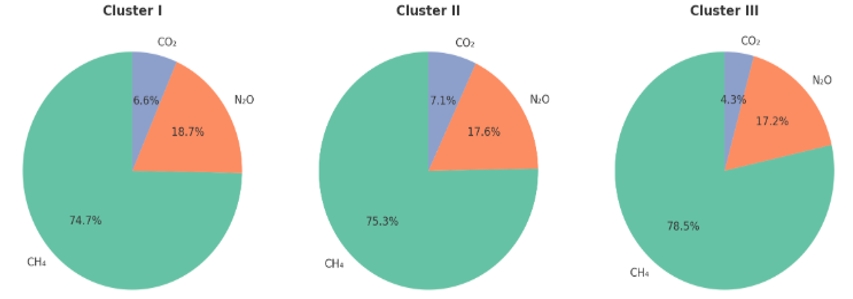
Figure 2. Proportion of greenhouse gas types within each dairy farm cluster
Table 5. Impact of farming system on types of GHGs
a, b, c: Different letters on the same column mean different values. p: probability. SEM: Standard error of the mean.
Mitigation pathways
The variability in greenhouse gas emission intensities observed among typological clusters highlights the importance of adopting mitigation strategies adapted to local production conditions, resource availability, and management practices. Based on the results of the present study, mitigation pathways in Tunisian dairy systems can be structured around three complementary pillars: nutritional strategies, animal-level management, and land-based improvements.
Nutritional management represents the most immediate and effective lever for reducing methane emissions, which were identified as the dominant contributor to total GHG emissions across all clusters. Improving forage quality and digestibility, optimizing starch-to-fiber ratios, and increasing dietary energy density can redirect rumen fermentation toward propionate production rather than methanogenesis, thereby lowering methane yield per unit of milk (Lileikis et al., 2023; Roques et al., 2024). Comparable outcomes regarding the importance of sustainable feeding and farm-level practices have been highlighted by Paskaš et al. (2025), who reported that improved dairy farming practices oriented toward sustainability contribute to enhanced environmental outcomes in European dairy systems, reinforcing the role of nutrition and management in reducing greenhouse gas emissions.
Feed additives also offer promising mitigation potential. The compound 3-nitrooxypropanol (3-NOP) has been shown to directly inhibit methanogenic activity and reduce methane emissions by approximately 30 % in lactating cows (Hristov et al., 2022; Kebreab et al., 2023). However, adoption in Tunisia remains constrained by cost and limited availability. More accessible alternatives include plant-based bioactive compounds such as essential oils and tannins. Tunisian studies have reported reductions in methane production following supplementation with garlic powder and eucalyptus oil extracts (Attia et al., 2016; Sahli et al., 2018). Similar results have been observed in Mediterranean systems using oregano, thyme, and anise essential oils (Sgoifo Rossi et al., 2022; Benetel et al., 2022; Bach et al., 2023). Nevertheless, the effectiveness of these additives depends on diet composition and animal characteristics, and further in vivo validation under Tunisian feeding conditions is required.
Improvement of forage systems constitutes a second key mitigation pathway, with implications for both methane and nitrous oxide emissions. Integrating legumes into crop rotations enhances forage digestibility and protein-energy balance while reducing reliance on synthetic nitrogen fertilizers, thereby lowering N2O emissions (Gerber et al., 2013; Snyder et al., 2009). Earlier harvesting stages and inclusion of tannin-rich species can further contribute to methane mitigation without compromising productivity (Lileikis et al., 2023). In water-limited environments such as Tunisia, drought-tolerant species including vetch–oat mixtures, sulla, and prickly pear cactus represent valuable options for improving feed stability and system resilience.
Animal-level management provides an additional long-term mitigation opportunity. Enhancing feed efficiency, reproductive performance, herd health, and cow longevity can reduce emissions per kilogram of milk by diluting maintenance requirements over a longer productive lifespan (Herrero et al., 2016). These strategies are particularly relevant for Cluster II farms, where improvements in nutrient-use efficiency and herd management could generate substantial reductions in emission intensity.
Land-based measures further complement these approaches by targeting nitrous oxide and carbon dioxide emissions. Practices such as improved pasture management, manure composting, optimized fertilizer application, agroforestry integration, and soil carbon enhancement can reduce N2O losses while increasing carbon sequestration (ONAGRI, 2023). These measures are especially important for Cluster I farms, which showed relatively higher N2O and CO2 intensities and could benefit from improved nutrient recycling and energy efficiency.
The typology-based approach adopted in this study provides a practical framework for prioritizing interventions. Aligning mitigation strategies with the structural and managerial characteristics of each cluster enhances their technical feasibility and potential effectiveness. Overall, reducing GHG emissions in Tunisian dairy systems requires an integrated strategy combining dietary optimization, improved animal performance, enhanced manure management, and sustainable land-use practices. The main challenge remains the translation of these technical solutions into economically viable and socially acceptable practices under local conditions. Future research should therefore focus on on-farm validation and cost-effectiveness analysis of the most promising mitigation options.
Conclusions
The current study showed that Cluster III, representing large-scale, irrigated, and input-intensive farms with diversified and forage-rich diets, had the highest total GHG emissions, particularly per hectare and per kilogram of live weight gain. Enteric fermentation was confirmed as the dominant emission source, especially in Cluster II, which corresponds to mixed rainfed-irrigated systems characterized by balanced feeding and higher stocking density conditions that favor ruminal fermentation and methane release. In contrast, Cluster I, composed mainly of smallholder landless or rainfed farms relying heavily on concentrate feeds and limited forage, showed the lowest total emissions but relatively higher nitrous oxide contributions, likely linked to inefficient manure handling and limited nutrient recycling capacity.
In terms of gas types, methane (CH₄) remained the most prevalent GHG, with the highest levels observed in Cluster III, consistent with its fibrous forage-based feeding system.
Overall, the results suggest that mitigation should rely on a global and integrated approach, combining animal-level and farm-level actions. These findings underline the need for context-specific mitigation strategies adapted to each production system, targeting feed efficiency, manure management, and sustainable land use. Future work should integrate mitigation and adaptation measures, including improved forage systems, climate-resilient genetics, and water management, to foster the transition toward low-emission and climate-smart dairy systems in Tunisia.